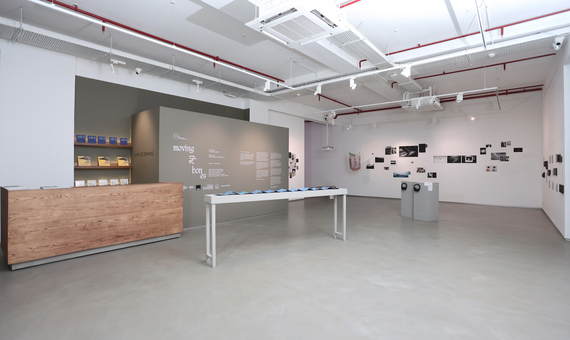
Curatorial Note
Some images begin closest to us. They are inherited before they are understood, sometimes orally, materially or in the body to return to us as distanced objects of memory. Yet, proximity does not promise us clarity. What we fail to recognise begins to gather weight.
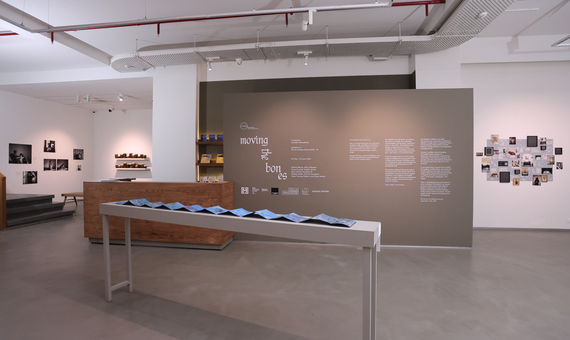
Taking its title from a poem by Philippines-born American poet Rick Barot, Moving the Bones begins with this strange intimacy. The exhibition tilts with Barot’s vocabulary of memory as weight: of its collapsing monumentality, and the labour required to tend to it. He writes, “We hold the bones, though we know memory is mostly forgetting.” This tension between remnant and loss becomes a grounding proposition here—that memory is not retrieval alone.
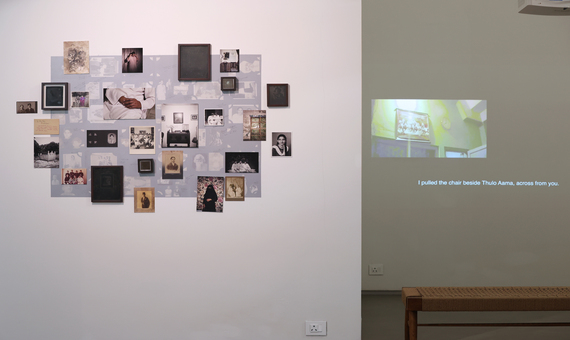
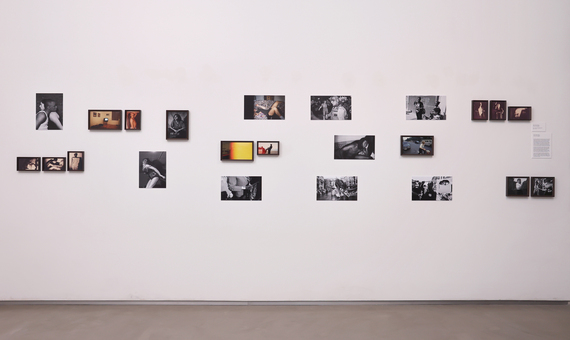
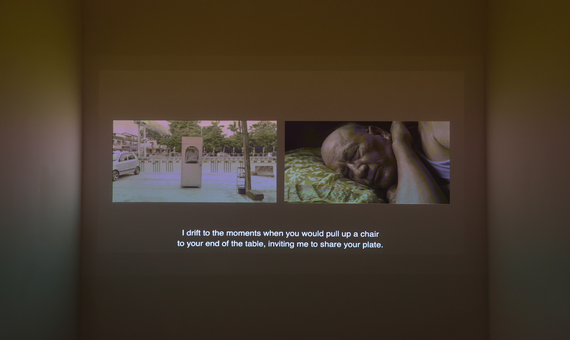
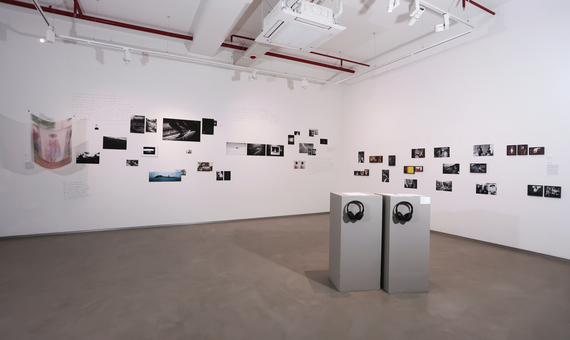
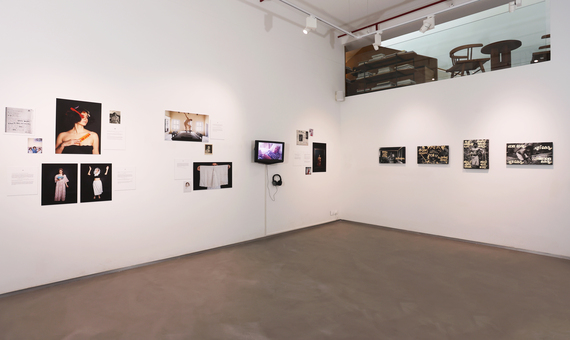
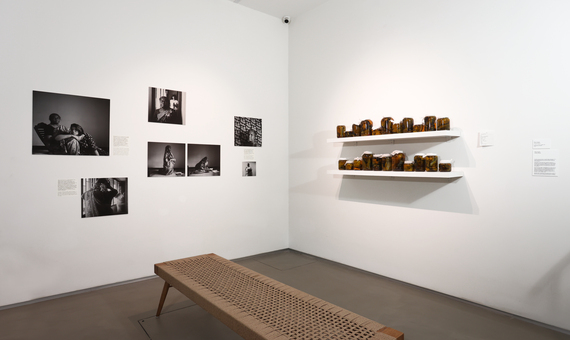
At the conceptual heart of this exhibition is the familial image: a configuration that operates within a larger visual economy of kinship, power, care, inheritance, desire, and estrangement, exceeding the material presence of the photograph itself. Across sonic, poetic, textual, material, and photographic registers, it builds a counterpoise to the visual—making space for it as something re-staged, dissolved, embroidered, sounded, spoken, and ferried through a range of mediums.
Here, the familial is not stable or benign. It is shaped by an uneasy framework inflected by occlusion: by what resists easy legibility, what is veiled, obscured and rewritten. The practices gathered in Moving the Bones press against the dysfunctions of the familial, attend to its asymmetries, and queer its more accepted narratives. As both a condition and an interstice, the familial image produces an inbetween-ness of medium, material, form and function, fuelling its own freedom and malleability. From this porous ground, the practices ask what remembering demands in this moment, and what it asks us to carry forward. In our present tense of displacement and destruction, around every familial form gathers another history: one where the world’s violences arrive first, and are held longest. These histories settle as indelible residue, altering how the familial is mapped, and what is carried forth as trace—in the body, in language, in the image.
The exhibition unfolds across three intersecting and overlapping axes, functioning as directional threads in a larger fabric. The first foregrounds the gendered labour of remembering, looking at how familial images are tended to by invisible, repetitive acts of care performed by women. One sees a reworking of domestic lives and interior landscapes that insists that the familial image is reimagined in how one tends to it: how its maintenance is never neutral, charged and laboured over, and rethought time and time again.
The second encounters the familial image as it enters motile archives, considering the nature of our relationships to what we inherit, seek out, possess, and disown. It thinks with these archival afterlives, questioning the authority of institutional tendencies, with omissions and over-writings made very visible. The third turns toward the familial as unrecognisable, estranged terrain. It views the familial as a spectral site, ghostly in how it dissipates when we grasp at it. Here, despite the familial fastening, the images resist truth and exactitude, marked by absent or inaccessible inheritances that further estrange their claims to recognition. Barot names this drift: “Look back far enough and your family becomes unfamiliar, a circle of people with a fading circumference.” What is withheld becomes as formative as what is inherited. Abstracted, submerged and disassembled, the images no longer resemble what they once did, in meaning and in form.
To speak of how we remember is to speak of history as a way of belonging. And belonging, like memory, is swept and re-swept. It is carried in the body. It is held in the bones. The familial is an uneven promise, a kind of fictive space where distance begins to make its own forms, its own strange orderedness. Across the processes in this exhibition, the familial image crystallises on the sensitised surface of memory, developed through writing, sound, touch, and return. Moving the Bones invites viewers into this movement—into the weight and the clearing, the keeping and the forgetting. Into the act of holding the bones, especially as they shift.
- Text by Annalisa Mansukhani